- Home
- Phnom Penh Tour Packages
Most Attraction Places
Guide by professional tour guides who have a minimum of 17 years of experience in the tourism industry
4-Days-City and Angkor Temples Tour
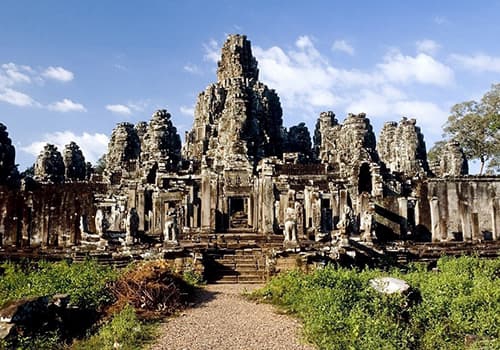
After arriving at Siem Reap international airport you will be welcomed and transfer to hotel for check in. After that you will to visit Angkor National museum, Wood and Stone Carving Center, Silk Farm and break for lunch. After having lunch, you will to visit Old market and then purchase the Angkor temple pass in order to see the Angkor Wat with sunset.
5-Days-Angkor wat ,Preah Vihear and Koh ker Tour
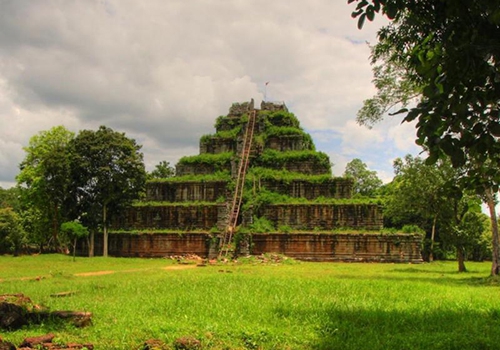
After arriving in Siem Reap airport you will transfer to hotel for check in. After that you will to visit Angkor National museum, Wood and Stone Carving Center, Silk Farm and break for lunch. After having lunch, you will to visit old market and then purchase the Angkor pass in order to see the Angkor Wat with sunset.
1- Day Angkor Wat Temple Tour
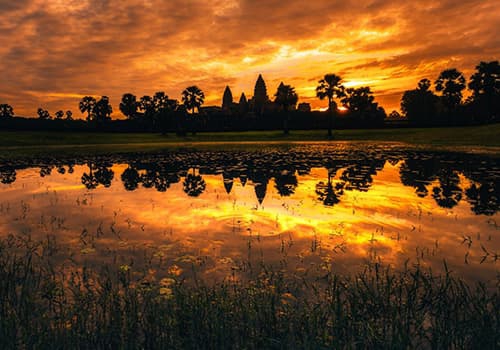
After breakfast at 8: 00 am you will be welcomed by our driver will bring you to see attraction such as : Angkor Wat (the largest religious monument in the world, only 35 years to be built) Ta Prohm (the temple in the Tomb Raider movie) Ta Nei (located off-road, deeply, quietly and peacefully in jungle) Ta Keo Banteay Kdei (In 2002 the Japanese Archeologists rediscovered 274 Buddhas in the pit) Lunch at local restaurant inside the Angkor Archeological area. Afternoon you will continue to see South Gate of Angkor Thom (the big walled city to be built by Buddhist King Jayavarman VII) Bayon (the state temple and temple mountain of Buddhist King, exactly at the middle of Angkor Thom) Baphuon (the tallest pyramidal temple closed 27 years for restoration by French) Wall of Royal Palace Phimeanakas Elephant and Leper King Terraces Chao Say Tevoda & Thommanon And returning back hotel
Bayon Temple
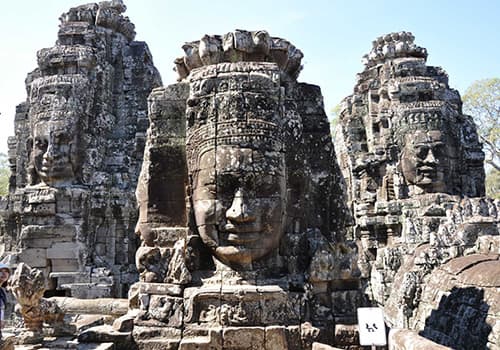
Location: in the centre of the city of Angkor Thom, 1.5 kilometres (1 mile) from the south gate Access: enter from the east Date: late 12th century to early 13th century King: Jayavarman VII (reigned 1181-1120) Religion: Buddhist Art style: Bayon BACKGROUND The Bayon vies with Angkor Wat as the favourite monument among visitors. The two temples evoke similar aesthetic responses yet are different in purpose, design, architecture and decoration. The dense jungle surrounding the temple camouflaged its position in relation to other structures at Angkor, so it was not known for some time that the Bayon stands in the exact geographical centre of the city of Angkor Thom. Even after topographical maps finally revealed its correct location, the Bayon was erroneously identified as a Hindu temple connected with the city of Yasovarman I, and, thus, dated to the ninth century. A fronton found in 1925 depicting an Avalokiteshvara, identified the Bayon as a Buddhist temple. This discovery moved the date of the monument ahead some 300 years to the late 12th century. Although the date is firmly supported by archaeological evidence, the Bayon remains one of the most enigmatic temples of the Angkor group. Its symbolism, original form, subsequent changes and additions have not yet been understood. These aspects leave us today with a complicated, crowded plan that challenges both archaeologists and historians. The Bayon was built nearly 100 years after Angkor Wat. While its basic structure and earliest part of the temple are unknown, it is clear that the Bayon was built on top of an earlier monument, that the temple was not built at one time, and that it underwent a series of changes. The middle portion of the temple was extended during the second phase of building. The Bayon of today with its huge central mass dates to the 13th century and belongs to the third and last phase of the art style. Jayavarman VII’s goal was to rebuild, the capital and to bring to the kingdom a new vibrancy, signifying a bright future for the Khmers. To accomplish this, he erected the Bayon and created a structure somewhat like a temple-mountain in its grandiose plan and scale. The architectural composition of the Bayon exudes grandness in every aspect. Its elements juxtapose each other to create balance and harmony. Over 200 large faces carved on the 54 towers give this temple its majestic character. ‘The faces with slightly curving lips, eyes placed in shadow by the lowered lids utter not a word and yet force you to guess much’, wrote P Jennerat de Beerski in the 1920s. It is these faces that have such appeal to visitors and reflect the famous ‘smile of Angkor’. The iconography of the four faces has been widely debated by scholars and, although some think they represent the Bodhisattva Avalokiteshvara, in keeping with 166 Angkor the Buddhist character of the temple, it is generally accepted that the four faces on each of the towers are images of King Jayarvarman VII and signify the omnipresence of the king. Besides the architecture and the smiling faces, the highlight of the Bayon is undoubtedly the bas-reliefs, presented in both the inner and outer galleries. The scenes in the outer gallery are unique as they depict many scenes from daily life. LAYOUT The plan of the Bayon is presented on three separate levels. The first and second levels contain galleries featuring the bas-reliefs. A 16-sided central sanctuary (4) dominates the third level, which is cruciform in plan. Despite this seemingly simple plan, the layout of the Bayon is complex due to later additions, a maze of galleries, passages and steps, connected in a way that makes the levels practically indistinguishable and creates dim lighting, narrow walkways and low ceilings. Enter the Bayon from the east (5) at the steps leading to the raised entrance platform. The outer gallery of the Bayon, the first to be encountered, is square in plan and is interspersed with eight cruciform gopuras (7) - one in each corner, and four placed on the north-south and east-west axes. The gallery was originally covered. The decoration on the pillars in front of the east gopura is characteristic of the Bayon style and is exceptionally beautiful. A unique motif comprising two or three apsaras dancing gracefully on a lotus appears on monuments of the late 12th and early 13th centuries. The depiction of this motif is especially well-executed on the columns of the outer gallery at the Bayon. The dancers are in a frontal stance, rather than in profile as seen at earlier temples such as the Roluos group. They form a triangle and are framed by an intricate and intertwined leaf pattern. The figure in the centre is larger than those on either side. Tip: the absence of a roof over these pillars allows sufficient light for the visitor to view and photograph this motif at all times of the day. Direct overhead sunlight at midday provides the most dramatic lighting. The two galleries of bas-reliefs are distinguished by the degree of elevation. The outer gallery is all on one level, whereas the second or inner gallery is on different levels and access is sometimes difficult due to collapsed areas and the generally poor condition of the temple. The layout of the inner gallery can be misleading, but as long as the reliefs are in view you are still in the second gallery. On the interior of the first level there are two libraries (6) located in the northeast and south-east courtyards. The second gallery of bas-reliefs has towers in each corner and four gopuras on the central axes (8). On the upper level there are a series of interlocking galleries with towers at each corner. This area is confusing and cramped due to passageways being walled up, the demolition of some parts and the filling of others. The architectural climax is at the third level (3),with the central sanctuary and the faces of Avalokiteshvara. From this level you can watch the shifting light as the sun moves about the faces producing new shadows and highlights. The multitude of faces at different levels affords endless fascination. ‘Godliness in the majesty and the size; mystery in the expression’, wrote de Beerski, when he looked at the faces in the 1 92Os. The central mass is circular, a shape that is uncommon in Khmer art. Originally, there were eight shrines which were later increased to 16. Small porches with frontons provide the bases for the monumental faces, while windows with balusters keep the diffusion of light to a minimum. The faces on the four sides of the eight towers marking the cardinal directions are exceptionally dramatic depictions. The interior of the central sanctuary is a cell surrounded by a narrow passage. GALLERY OF BAS-RELIEFS ‘They have homely human things to tell and they tell them without affectation’, wrote H Churchill Candee of the bas-reliefs in the galleries of the Bayon.” The reliefs on the inner gallery are mainly mythical scenes, whereas those on the outer gallery are a marked departure from anything previously seen at Angkor. They contain genre scenes of everyday life – markets, fishing, festivals with cockfights and jugglers and so on – and historical scenes with battles and processions. The reliefs are more deeply carved than at Angkor Wat, but the representation is less stylised. The scenes are presented mostly in two or three horizontal panels. The lower one, with an unawareness of the laws of perspective, shows the foreground, whereas the upper tier presents scenes of the horizon. They both exhibit a wealth of creativity. Descriptions of the reliefs in this guide follow the normal route for viewing the Bayon. They begin in the middle of the east gallery and continue clockwise. Always keep the monument on your right. Tip: do not become so absorbed in the reliefs that you forget to stop at each opening and enjoy the view of the faces on the third level. THE E OUTER OR FIRST GALLERY This is the gallery with the wonderful scenes of daily life. It was probably open to all worshippers, whereas the other areas of the temple would have been restricted to priests and the king. The scenes may have served as a teaching vehicle to disseminate the tenets of Buddhism. Some of the scenes in his gallery are unfinished. For evidence of this, look at the extremities, such as the corners, particularly near the top of the wall. EAST GALLERY The workmanship of the reliefs in this gallery is excellent. They are divided into three panels and depict a military procession with banners and a background of tropical trees (1). On the top tier, warriors (short hair and no head covering) are armed with javelins and shields, while those on the lower tier have goatee beards and wear exotic headdresses suggesting they are Chinese. Musicians accompany the warriors. Horsemen riding bareback flank the musicians. The commanders of the troops, including Jayavarman VII, identified by parasols with tiers and insignias, are mounted on elephants. Cavalry precede, and women of the palace follow the king. Towards the end of the procession, covered wooden carts (on the lower tier) of the same style as are used today, carry provisions of food for the military. A crouching woman blows a fire for a cooking pot. Looking through the doorway between (1)and (2) where you can see the south library. The military procession continues (2).The reliefs follow on with genre scenes of everyday life and include a coconut tree with monkeys. A tiered wooden building may be a food shop. The headdresses, clothing and objects hanging from the ceiling suggest that the people inside the building are Chinese. SOUTH-EAST CORNER PAVILION (3) The carving in this area is unfinished. Identifiable scenes include a wooden palace with a superb kendi (drinking vessel) underneath the stairs of the two storeys. An ingenious depiction of a boat spans a 90-degree turn in the wall. SOUTH GALLERY The scenes in the first part of this gallery (4) contain some of the finest workmanship of all the reliefs at the Bayon. The panel begins with a historical scene depicting the naval battle of 1177 on the Tonle Sap between the Khmers (with no head covering) and the Chams, their neighbouring enemies of south-east Vietnam. They are readily identifiable by their hats, which resemble upside-down lotuses. The boats are majestically portrayed with richly ornamented prows and a galley with oarsmen and warriors armed with javelins, bows and shields. Helen Churchill Candee must have had these boats in mind when she wrote: ‘One wonders if Cleopatra floated in greater elegance’.’* Action is provided by bodies being thrown overboard, and sometimes being eaten by crocodiles. On the bottom row, genre scenes of daily life along the shores of the Tonle Sap are depicted with spirit and candour – a woman removing lice from another woman’s hair, a mother playing with her children, another woman kneeling with her arms around a figure who is writhing in pain, which may be a scene of childbirth assisted by a midwife, and a patient in a hospital. A hunter prepares his bow to shoot a large animal. A fishing scene follows: people on one of the boats play a board game; a scene of a cockfight; above, fishermen on the Tonle Sap and, below, women the majestic Bayon temple with surrounding moat.174 Angkor fishmongers. Scenes of the palace follow – princesses surrounded by their suitors, wrestlers, sword fighters, chess players and a fight between wild boars. An outline of a giant figure, perhaps the king, surmounts this entire scene. Further along the gallery, the battle resumes. Lower tier: the Chams arrive in boats and disembark. Upper tier: the battle continues on land with the Khmers, disguised as giants (closely-cropped hair and cords around their torsos) winning. Afterwards, the king sits in his palace amidst his subjects celebrating their victory. Masons cut sandstone, blacksmiths pound iron and cooks tend fires in preparation for a celebration. In the second part of the south gallery (5) only the lower level is finished. The scene is a military procession and the main point of interest is the weapons of war used by the Khmers such as large cross-bows mounted on the back of an elephant manned by archers and a catapult mounted on wheels.
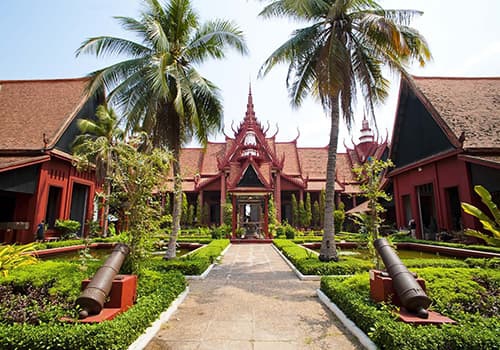
2-Days Phnom Penh City Tour
After your landing in Phnom Penh universal Airplane terminal you will be invited by our driver or guide will take you to your lodging that you have been reserved for check-in. What's more, than you will to visit National Museum, Royal Residence and silver pagoda, wat Phnom historical tourism site, Central Market. Break for lunch at local restaurant along the riverside. In the wake of eating you will keep on seeing Genocide Museum center Khmer Rouge Jail , Choueng Ek of Slaughtering (Killing fields where the place of the khmer rouge took Cambodian individuals to murder ) , Russian Market and Apsara dancing show from 7-8 pm at the National Exhibition hall.
3-Days Phnom Penh Tour
After your arrival at Phnom Penh international airport you will be welcomed by our driver or guide will bring you to your hotel that you have been reservationed and than we will take you to visit such as: ● Toul Sleng S-21 ● Killing Fields Break for lunch at local restaurant along the river side. Afternoon you will continue to visit ● Russian Market This sweltering bazaar is the one market all visitors should come to at least once during a trip to Phnom penh city. It is the place to shop for souvenirs and discounted name-brand clothing. We can not vouch for the authenticity of everying , but along with plenty of knock -offs you will find genuine articales stitched in local factories. ● King Palace & Silver Pagoda and go back to hotel for relaxing. Tuol Sleng Museum S 21 Originally built as a secondary school named Tuol Svay Prey High School in 1960, during the reign of Preah Bat norodom Sihanouk. The Khmer Rouge converted this into a torture and interrogation centre to extract 'confessions' of anti-government sentiment. Many victims were women and children incarcerated along with the 'suspected' father. Documents recovered indicate that over 17,000 persons had been imprisoned there between 1975 and 1978, only seven of whom are known to have survived. Choeung Ek of Killing Fields 15km southwest of the city centre is one of the many sites of Khmer Rouge mass executions. The exhumed skulls of some 8,000 souls, arranged by sex and age, are displayed behind glass panels in the Memorial Stupa, which was erected in 1988. Although some were killed and buried at Toul Sleng, most victims were driven out to Choeung Ek at night by truck. Some were made to dig their own graves before being clubbed to death with any heavy instrument available. Royal Palace & Silver Pagoda. Built in 1866, the site contains various buildings of interest, including the Khmer-style Throne Hall, now used for special ceremonial occasions. South of the Throne Hall are the Royal Treasury and the Villa of Napoleon III, built in Egypt in 1866, for the opening of the Suez Canal , and was later presented to the Cambodian king as a gift.
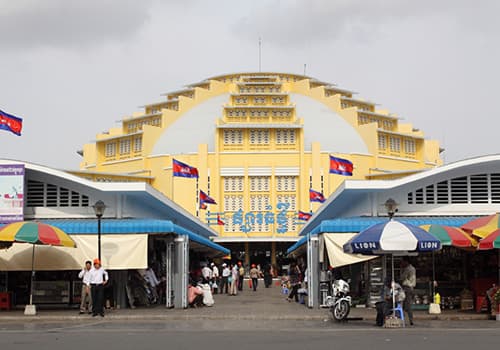
Central Market
The dark-yellow Art Deco Phsa Thmei (New Market) is also referred to as the Central Market, a reference to its location and size. It was constructed in 1935-37. The Art deco building is shaped in the form of a cross with a nice central dome has become a major landmark for the city. Around the main buildings are stalls offer a wide variety of goods from gold and silver jewelry to antiques, Krama (checked scarves), stationery, household items, cloth for sarongs, flowers and second hand clothes, usually from Europe and the US. There are a host of good value food stalls on the structure's western side, which faces Monivong Blvd. Central Market is undoubtedly the best of Phnom Penh's markets for browsing. It is the cleanest and has the widest range of products for sale. Opening hours are from early morning until early evening. Central Market (Phsar Thmei) in Phnom Penh is one of those busy bazaars that are always filled with effervescent crowd from one end to the other. The Central Market (Phsar Thmei) of Phnom Penh stocks everything right from food items to clothes, silverworks and jewelries. Where the Central Market (Phsar Thmei) in Phnom Penh is now located was previously a swamp that was used to accumulate runoff rainwaters. The market building is a beautiful one, a spectacular instance of Cambodian architecture. Central Market (Phsar Thmei) of Phnom Penh in Cambodia also sells electronic items and there is also plenty of secondhand stuff that you can buy here at an affordable rate. The gateway to the market is lined with hawkers who sell different kinds of tidbits. The jewelries are found in the interior of the market and some of the gold ornament that you will find here are really unsurpassable in design and style. Central Market (Phsar Thmei) at Phnom Penh should have been actually called the New Market for that is what "Phsar Thmei" means in English. However, today it is popular to the tourists by its present English name. Coming to Central Market (Phsar Thmei) in Phnom Penh and then going back to your respective hotel is easy as there are plenty of transportation facilities near the marketplace. A taxi stand can be found at the northwest corner of the market and the southwest exit will take you to a bus stand. Whoever loves to browse endlessly through small yet enticing shops, will find the Central Market (Phsar Thmei) in Phnom Penh an enchanting place. The name "Phsar Thmey" means "New Market" but in English, it is commonly called "Central Market". This may cause some come confusion because Phnom Penh also has a "Phsar Kandal" close to Wat Unalaum and the Riverside. That name would translate in English to Central Market
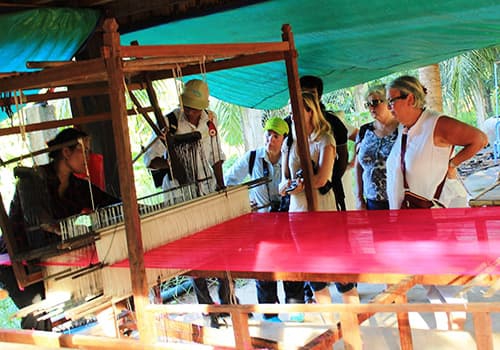
Silk Island
Known by locals as Koh Dach, Silk Island sits upstream on the Mekong near Phnom Penh and offers travelers to Cambodia’s capital city a quick escape from the urban landscape into a village that feels worlds away. The rural community of Silk Island is comprised of dozens of local artisans—well-trained silk masters who hand weave some of the most glamorous fabrics from one of the nation’s most prized resources. Visitors say that the residents who carry on this age-old craft are kind and inviting, offering a warm contrast to the hustle of city streets. Silk Island offers travelers the perfect opportunity to step back in time, see artisans at work, learn more about the silk trade and collect some handmade crafts before heading back to the mainland.
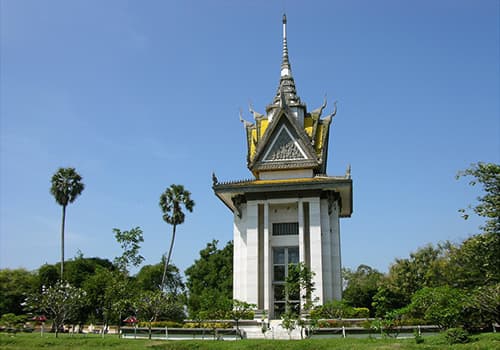
Killing Fields +Toul Sleng S-21
Today we will to pick you up from hotel at 8 :00 am and invite you to visit Choeung Ek of killing fields and Toul Sleng genocide museum ,where the place of khmer rouge tortured and executed of people Cambodia in 1975-1978. Choeung Ek of Killing Fields Between 1975 and 1978, about 17,000 men, women, children and infants (including nine westerners) detained and tortured at S-21 prison (now is Tuol Sleng Museum) were transported to the extermination to death to avoid wasting precious bullets. The remains of 8985 people, many of whom were bound and blindfolded, were exhumed in 1980 from mass graves in this one-time long an orchard; 43 of the 129 communal graves here have been left untouched. Fragment of Human bone and bits of cloth are scattered around the disinterred pits. Over 8000 skulls, arranged by sex, are visible behind the clear glass panels of the Memoral Stupa, which was erected in 1988.The Killing Fields of Choeung Ek are 15 km from Central Phnom Penh. To get there, take Monireth Blvd south-westward out of the city from the Dang Kor Market bus depot. The site is 8.5 km from the bridge near 271 Street a memorial ceremony is held annually at Choeung Ek on 9 May. Killing Fields of Cheung Ek is situated 15 kilometers south-west of Phnom Penh and made famous by the film of the same name "Killing Field". it was a place where more than 17,000 civilians were killed and buried in mass graves; many of them transported here after detention and torture in Toul Sleng. This place is a chilling reminder of the brutalities of the genocidal Khmer Rouge regime. In the center of the area is a 17 story glass stupa which houses 8000 skulls exhumed from mass graves. Open daily.Note: Both Tuol Sleng Museum and the Killing Fields exhibits may be disturbing for some and aren't suitable for younger children and adults who are easily shocked. The Cheung Ek genocide museum is located in Cheung Ek commune, Dankoar district, about 15 km from the centre of Phnom Penh. This is the location where the Khmer Rouge took their prisoners for execution. The prisoners were made to wait here for 24 hours before they were killed by a blow to the head after which their throats were slit. Babies were killed by bashing their heads against a tree. There were separate graves for men, for women and for children. Former friends of Pol Pot who were executed here had separate graves too.Visitors can walk along 86 mass graves from which the remainders of 8,985 men, women and children were unearthed after the liberation of the Khmers Rouges. Some of those skulls, bones and pieces of clothing are now kept in the nearby massive stupa. There were killing fields all over the country, but Cheung Ek was believed to be the largest every year on the 20th of May a ceremony is held around the stupa to bring peace to the spirits of the deceased.Sightseeing in Phnom Penh gives the tourists ample opportunity to visit the numerous places in and around the city. Cheung Ek Killing Field in Phnom Penh is a very important place in the city as it has a long history attached to it. The place is really fascinating for all those coming to visit the city. The place has a long history behind it and reminds one of the horrifying times that the people of Cambodia have gone through during the reign of Khmer and after. The Cheung Ek Killing Field at Phnom Penh is one of the most prolific and historic place in Phnom Penh and stands a cruel reminder of the atrocities inflicted upon the masses of Cambodia. The place has become very popular now as it is the center of all killings which took place in the city and later got christened as the famous Killing Field. The place is really popular as tourists from all over the world come here. The place has really direct links with the horrific past of Cambodia and Phnom Penh. There are many things to see while visiting the Cheung Ek Killing Field in Phnom Penh. The place has been most aptly been named as the Killing Field in Phnom Penh. The place is actually a mass grave where almost 17,000 innocents were slaughtered mercilessly for no fault of theirs. The place is really frightening and sends a shiver down the spine as one recalls how the place had been transformed into a grave. There is actually a stupa which stands in the middle of the area and it is this stupa which has become the place for housing the 8,000 skulls taken out from the mass graves. Cheung Ek Killing Field of Phnom Penh is open daily. All are welcome though it is advised by the authorities that children should be advised and properly guided before they come here. Cheung Ek Killing Field in Phnom Penh is located at a distance of 15 kilometers away from the south -western frontiers of Phnom Penh. Toul Sleng Genocide Museum In 1975 , Toul Svay Prei High school was taken over by Pol Pot's security force and turned into a prison known as security priso s-21. It soon became the largest such centre of detention and torture in the country. Over 17,000 people held at s-21 were taken to the extermination camp at Choeung Ek to be executed, detainees who died during torture were buried in mass graves in the prison ground. S-21 has been turned into the Toul Sleng museum , which serves as a testament to the crimes of the khmer rouge. - Entrance fee (killing Fields is 6USD each including Audio Tour). - Entrance fee (Toul Sleng s-21 is 8USD each including Audio Tour). -Touring with air-conditioning Lexus SUV car 1-5 seats , the price is 39 USD. -Touring with Tuk Tuk is 20 USD including English speaking driver -We offer you Lexus SUV+Gasoline+parking fee+speaking English driver - Note: This price is not include any tickets for visiting
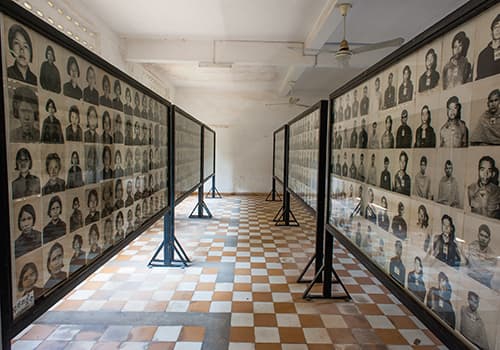
Toul Sleng Genocidal Museum
Toul Sleng Genocidal Museum (S-21) In 1975, Tuol Svay Prey High School was taken over by Pol Pot's security force and turned into a prison known as Security Prison 21 (S-21). It soon became the largest such center of detention and torture in the country. Over 17,000 people held at S-21 were taken to the extermination camp at Choeung Ek to be executed; detainees who died during torture were buried in mass graves in the prison grounds. S-21 has been turned into the Tuol Sleng Museum, which serves as a testament to the crimes of the Khmer Rough. The museum's entrance is on the western side of 113 St just north of 350 St, and it is open daily from 7 to 11.30 am and from 2 to 5.30 pm; entry fee is US$ 8 including Audio tour for explanation. Like the Nazis, the Khmer Rough was meticulous in keeping records of their barbarism. Each prisoner who passed through S.21 was photographed, sometimes before and after being tortured. The museum displays include room after room in which such photographs of men, women and children cover the walls from floor to ceiling; virtually all the people pictured were later killed. You can tell in what year a picture was taken by the style of number board that appears on the prisoner's chest. Several foreigners from Australia, France and the USA were held here before being murdered. Their documents are on display. As the Khmer 'revolution' reached ever-greater heights of insanity, it began devouring its own children. Generations of tortures and executioners and were in turn killed by those who took their places. During the first part of 1977, S-21 claimed an average of 100 victims a day. When the Vietnamese army liberated Phnom Penh in early 1979, they found only seven prisoners alive at S-21. Fourteen others had been tortured to death as Vietnamese forces were closing in on the city. Photographs of their decomposing corpses were found. Their graves are nearby in the courtyard. Altogether, a visit to Tuol Sleng is a profoundly depressing experience. There is something about the sheer ordinariness of the place that make it even more horrific; the suburban setting, the plain school buildings, the grassy playing area where several children kick around a ball, ousted beds, instruments of torture and wall after wall of harrowing black-and-white portraits conjure up images of humanity at its worst. Tuol Sleng is not for the squeamish.
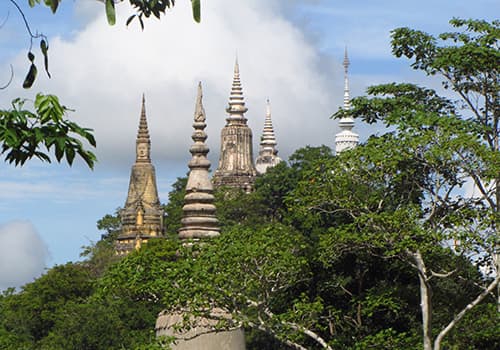
Three Day Tours
After your arrival at Phnom Penh airport you will be welcomed by our driver will bring you to your hotel that you have been reserved for check in. After that you will to visit such as: - King Palace and Silver Pagoda - National Museum - Wat Phnom Historical and Tourism Site - Central Market Break for lunch at local restaurant along the Riverside. After having lunch you continue to see - Genocide Museum ( S-21 prison ) - Cheoung Ek of Killing Field ( where the place of Khmer Rouge took Cambodian people to kill, at lease 17,000 men, women, children and infants were killed between 1975-1979).
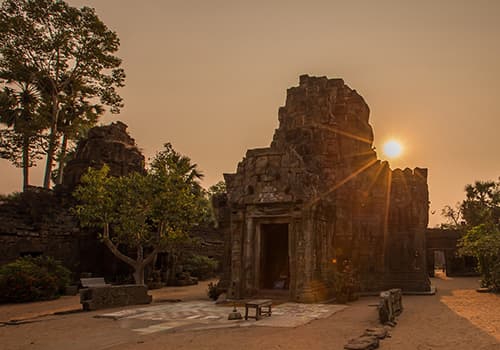
Tonle Bati & Taprohm Temple
Tonle Bati &Taprohm Temple Tours in Takoe province Tonle Bati Is located in Thnal Teaksin village , krang Thnoung commune, Bati district, about 35 kilometers from Phnom Penh. Tonle Bati is a place of worship and features two ancient temples , Taprohm and Yeay Pov , and a pagoda, wat Tonle Bati, which was built in 1576. Taprohm Temple This temple adapted from Bayon style, was built during the late 12th and early 13th centuries, during the reign of King Jayavarman VII ( AD 1181-1220 ) as a place of worship for Brahmans and Buddhists. The temple is 42 meters long, 36 meters wide and 11 meters high. Today the temple body , the gallery , the wall , gopura and the moat surrouneding the temple are heavily damaged. The temple was constructed of brick and laterite and divided into many rooms. The outside wall is decorated with bas-reliefs illustrating the Brahman story about the celestial nymph. Inside the temple are five rooms and a 13th century Buddha statue that faces East. Yeay Pov Temple : Yeay Pov temple is behind Wat Tonle Bati , about 100 meters from Taprohm temple. Constructed of sandstone in the 12th centuries, it is 7 meters square and faces East. In addition, there is also a natural lake that is 7000 meters long . During the dry season the lake is 1000 meters wide and 1 to 2.5 meters deep. During the rainy season it swells to 1,500 meters wide and is about 4 meters deep. Please send us your itineraries I will quick response with lowest price and best services. Touring with excellent air condition car with speaking English driver. - Touring with car 45 USD. - Touring with Tuk tuk 35 USD - Touring with Mini Van 65 USD
Phnom Tamao Wildlife Rescue Centre
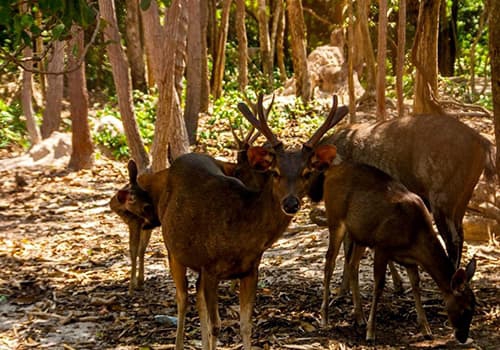
This wonderful wildlife sanctuary for rescued animals is home to gibbons, sun bears, Elephants, Tigers, Lions, Deer and a massive bird enclosure. They were all taken from poachers or abusive owners and receive care and sheiter here as part of a sustainable breeding program. Wherever possible animals are released back into the wild once they have recovered, the centre operates breeding programs for a number of globally threatened species. The sanctuary occupies a vast site south of the capital and its animals are kept in excellent conditions by southeast Asian standards, with plenty of room to roam in enclosures that have been improved and expanded over the years with help from international wildlife NGOs. Spread out as it is , it feels like a zoo crossed with a safari park. The centre is home to the world's largest captive collections of pileated gibbons and Malayan sun bears, as well as other rarities such as Siamese crocrodiles and greeter adjutant storks. Other popular enclosures include huge areas for the large tiger population, and there are elephants that sometime take part in activities such as painting . You 'll also find a walk-through area with macaques and deer, and a huge aviary . Cambodia's wildlife is usually very difficalt to spot, as larger mamals inhabit remote areas of the country . Phnom Tamao is the perfect place to discover more about the incredible variety of animals in Cambodia. If you don't like zoos , you might not like this wildlife sanctuary , but remember that these animals have been rescued from traffickers and poachers and need a home. Visitors that come here will be doing their own small bit to help in protection and survival of Cambodia's varied and wonderful wildlife. Phnom Tamao is located in Tropiang Sap village Tropiang Sap commune, Bati district about 40 kilometers South of Phnom Penh, off National Road 2. Turn right at the sign and travel another 5 kilometers down a dirt trail . The site features mountains , the biggest National zoo and ancient temples. There are five mountains at this site , Phnom Takmao , Phnom Thma Dos , Phnom Pdaov pun , Phnom Chhoy and Phnom Bang. The entire site covers 2,500 hectares, most of it is the protected forest area. The ministry of Agriculture of Department of forestry has taken over 1,200 hectares for planting trees and the zoo. Phnom Takmao National zoo covers 70 hectares and is under the supervision of the department. It features 84 varieties of birds , quadrupeds and reptiles. The animals, which include alligators, Elephants, Lions, tigers and bears , were collected by the ministry of Agriculture. Some were recovered from people illegally trafficking wildlife in Cambodia. Please send us your itineraries if you would like to travel t o visit this place i will do quote for you with the best price. Touring with air conditioning car 1-4 seats with speaking English driver. - Touring with a/c car 1-4 seats is 60 USD - Touring with Tuk tuk is 39 USD - Touring with a/c Mini Van is 79 USD
Phnom Da Angkor Borei
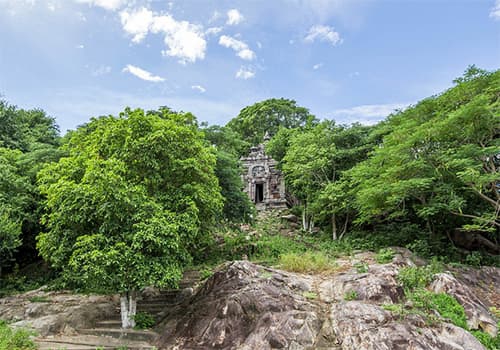
Takeo Province Tours There are several attractions places that make a good day trips in Takeo province such as: ● Phnom Da Temple & Angkor Borei ● Phnom Chisor Temple ● Phnom Tamao wildlife Rescue Centre ● Tonle Bati & Taprohm Temple ● Neang Khmao Temple Takeo , the oldest of Cambodia is 24 provinces, is one of the most developed provinces in Cambodia.It is rich in history relating to the Nokor Phnom period and the Zhenla Empire. The tourism industry here is developing rapidly and playing role in the changing faces of the province. In TaKeo province there are 34 ancient temples that are the heritage and soul of the Khmer, making the province a popular destination for tourists. Among the temples in Takeo province , parts of six are still standing. They include : Phnom Da Temple : It was built on the top of a small hill in 6th century by king Rutravarman, who reigned during the Nokor Phnom period, according to the french historian Mibreno. The temple is 12 meters square and 18 meters high. It was constructed of laterite , brick and sandstone. A Brahman temple, it faces north towards Nokor kork Thalork, which was the capital of Nokor Phnom at the time the temple was built. There is no rampart. The temple of peak is damaged, and a sculpure depicting the story of Churning of the Ocean of Milk has been broken into two parts. A lintel illustrates the figure of sleeping Vishnu. There are false doors on three sides and a real door that opens on the north side. In the flank of the hill are five man-made caves that reflect the style of Phnom Da, which is similar to india style. In each cave , there is a Shiva lingam and Uma yoni, objects that Bramans worship. During the Pol Pot regime , between 1975 and 1979, the caves were used as cremation places by the Khmer Rouge. About 300 meters southwest of the temple is another smaller temple known as Asrom Moha Eysei . Built at the end of the 6th century in Zhenla period, during the reign of king Pavavarman I , the temple has five windows and two doors. It is 5.5 meters square and 7 meters high , it is built that faces north. Neang Khmao Temple : Neang Kmao temple is located in Rovieng commune, Samrong district, off National Road 2 about 52 kilometers south of Phnom Penh. This temple is inside Wat Neang Kmao. Constructed of sandstone and brick in the style of Koh ker, the temple was built by king Jayavarman IV from 921-941 in the 10th century for the worship of Brahmanism. The site originally consisted of three temples built side by side, however, only two are still standing, and both are heavily damaged. Phnom Chisor Temple Phnom Chisor temple is a historical site located in Sla village , Rovieng commune , Samrong district , about 62 kilometers south of Phnom Penh. Phnom Chisor temple was built in the early 11th century by king Suryavarman I (AD 1002-1050), Who practiced Brahmanism. Constructed of sandstone and other stones, it is 60 meters long and 50 meters wide and sits atop a mountain. The temple is surrounded by two galleries. The first gallery , is 60 meters long each side. The second, smaller gallery, is in the middle,where there is the main worship place with two doors and a wooden statue. There are beautiful sculptures on the lintel and the pillars. All the tourists usually climb the staircase on the west side of the mountain, which has 390 steps and descend by the south side staircase, which has 408 steps. Another set of stairs in frond of the temple links the to Sen Chhmos temple, Sen Phouvang temple and Tonle Om, a lake considered sacred by Brahmans and used for washing away sins. In addition, there is a mountain cave, Vimean Chan, located about 150 meters south of the temple. It is a quiet place for Brahmans or ascetics to meditate. During the American war with Vietnamese, the site was bombed, dislodging several large rocks that block the entrance to the cave today. Tonle Bati Tonle Bati is located in Thnal Teaksin village, Krang Thnoung commune, Bati district , about 35 kilometers from phnom penh . Tonle Bati is a place of worship and features two ancient temples , Taprohm and Yeay Pov, and a pagoda, Wat Tonle Bati, which was built in 1576. Taprohm Temple This temple, adapted from Bayon style , was built during the late 12th and early 13th centuries, during the reign of king Jayavarman VII ( AD 1181-1220 ) as a place of worship for Brahmans and Buddhists. The temple is 42 meters long , 36 meters wide and 11 meters high. Today the temple body, the gallery , the wall, gopura and the moat surrounding the temple are heavily damaged. The temple was constructed of brick and laterite and divided into many rooms. The outside wall is decorated with bas-reliefs illustrating the Brahman story about the celestial nymph. Inside the temple are five rooms and a 13th century Buddha statue that faces east. Yeay Pov Temple Yeay Pov temple is behind Wat Tonle Bati , about 100 meters from Ta Prohm Temple . Constructed of sandstone in the 12th century, it is 7 meters square and faces east. In addition, there is also a natural lake that is 7000 meters long . During the dry season , the lake is 1000 meters wide and 1 to 2.5 meters deep. During the rainy season , it swells to 1,500 meters wide and is about 4 meters deep. Phnom Tamao wildlife Rescue Centre Phnom Tamao National zoo covers 70 hectares and is under the supervision of the department. It features 84 varieties of birds , quadrupeds and reptiles. The animals, which include alligators, elephants , lions, tigers, and bears, were collected by the Ministry of Agriculture.Some were recoved from people illegally trafficking wildlife in Cambodia. Phnom Bayong & Environs Affording breathtaking views of Vietnam's pancake-flat Mekong Delta, the cliff-ringed by a 7th-century Chenla temple built to celebrate a victory over Funan. The linga originally in the inner chamber is now in paris'museé Guimet, but a number of flora-and fauna-themed bas-relief panels can still be seen, for example on the lintels of the three false doorways and carved into the brickwork.
Phnom Chisor
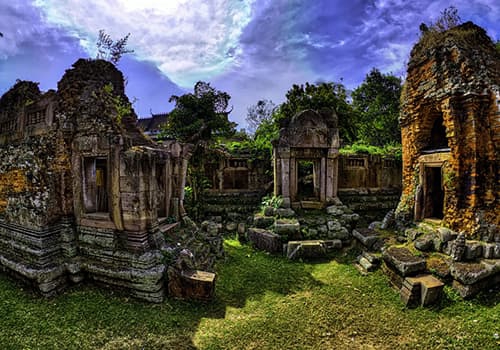
A temple from the Angkorian era, Phnom Chisor is set upon a solitary hill in Takeo Province, offering superb views of the countryside. Try to get to Phnom Chisor early in the morning or late in the afternoon, as it is an uncomfortable climb in the heat of the midday sun. Phnom Chisor lies about 55km south of Phnom Penh. The main temple stands on the eastern side of the hilltop. Constructed of laterite and brick with carved sandstone lintels, the complex is surrounded by the partially ruined walls of a 2.5m-wide gallery with windows. Inscriptions found here date from the 11th century, when this site was known as Suryagiri. On the plain to the west of Phnom Chisor are the sanctuaries of Sen Thmol (just below Phnom Chisor), Sen Ravang and the former sacred pond of Tonlé Om. All three of these features form a straight line from Phnom Chisor in the direction of Angkor. During rituals held here 900 years ago, the king, his Brahmans and their entourage would climb a monumental 400 steps to Suryagiri from this direction. If you haven’t got the stamina for an overland adventure to Preah Vihear or Phnom Bayong (near Takeo), this is the next best thing for a temple with a view. Near the main temple is a modern Buddhist vihara (temple sanctuary), which is used by resident monks.
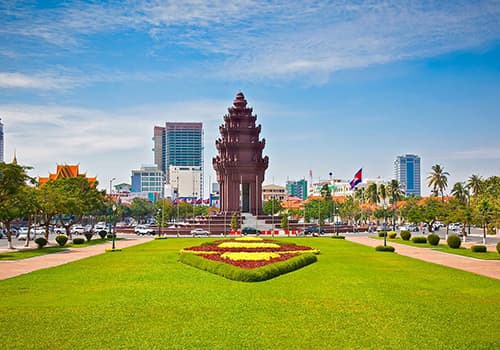
The Independence Monument
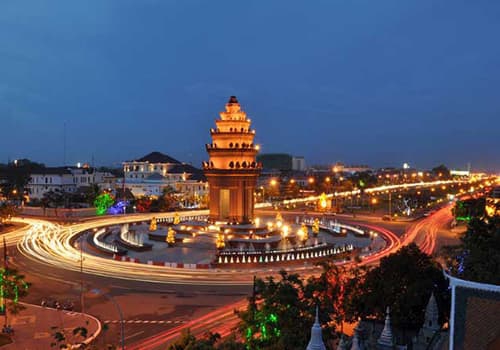
The Independence Monument (Vimean Ekareach) is situated at the cross of the Sihanouk and the Norodom Boulevards in the center of Phnom Penh. It was built in 1958 to commemorate the country's victory against the French regime. The monument has the shape of a lotus shaped stupa which is familiar in the Angkor Vat's image and also the great Khmer historical sites. It was designed by famous Cambodian architect Vann Molyvann. It is 20 meters high and made of red stone. Its construction was implemented as the order of King Norodom who was King Sihanouk's father. In national celebrations especially the Independence Day, the monument is the center of attraction. At these times, there are many activities for local and international tourists to enjoy a nice time here. It’s an endless attraction for Independence Monument during the Independence Day’s eve. A high or royal official set a ceremonial flame in the interior pedestal and line up the floral tributes on the stairs. And people lay down coronals to commemorate the heroes who have contributed their lives for country’s independence. Independence Monument is a notable sight in Phnom Penh. Tourists can sit here, enjoy the solitude and take photographs. It’s also a wonderful place to enjoy the quietude and the summer refreshing breezes from the Tonle Sap.
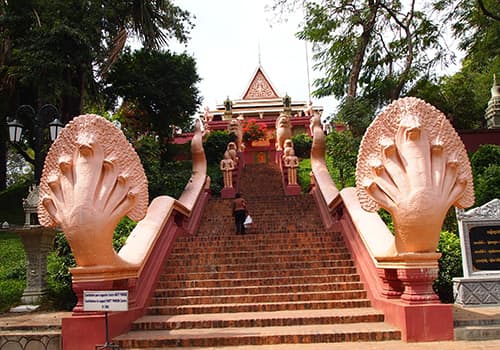
Wat Phnom
The temple has a strong connection with establishment of the capital city of Cambodia. The current name of the city Phnom-Penh in native language means literally the hill of Ms. Penh. According to a legend, a woman named Penh found a lot of little statues of Buddha in the river, and established the first settlement. She had the Wat Phnom temple built on the nearby hill to celebrate the Buddha statues found in the river. It is widely believed that the Wat Phnom temple was built in 1373. It is the largest religious building in the capital city Phnom-Penh . A lot of other smaller chapels were built in the vicinity of the Wat Phnom during the last centuries. This museum takes as its focus the social history of the city of Phnom Penh; this does include the relationship of the city with the rest of Cambodia. The museum is filled with diorama, which describe the history and major events of the city. There are also numerous artifacts: uniforms of kings and soldiers, farm implements, paintings, photographs, political tracts, and so forth. Today, Wat Phnom is the foundation point for the city of Phnom Penh (at least according to legend). This Wat is a major tourist destination in the city, and underneath this Wat is a surprisingly large and well-presented museum. - Opening Hours: Mon-Sun 09.00-18.00 - Entrance Fee: USD 2.00